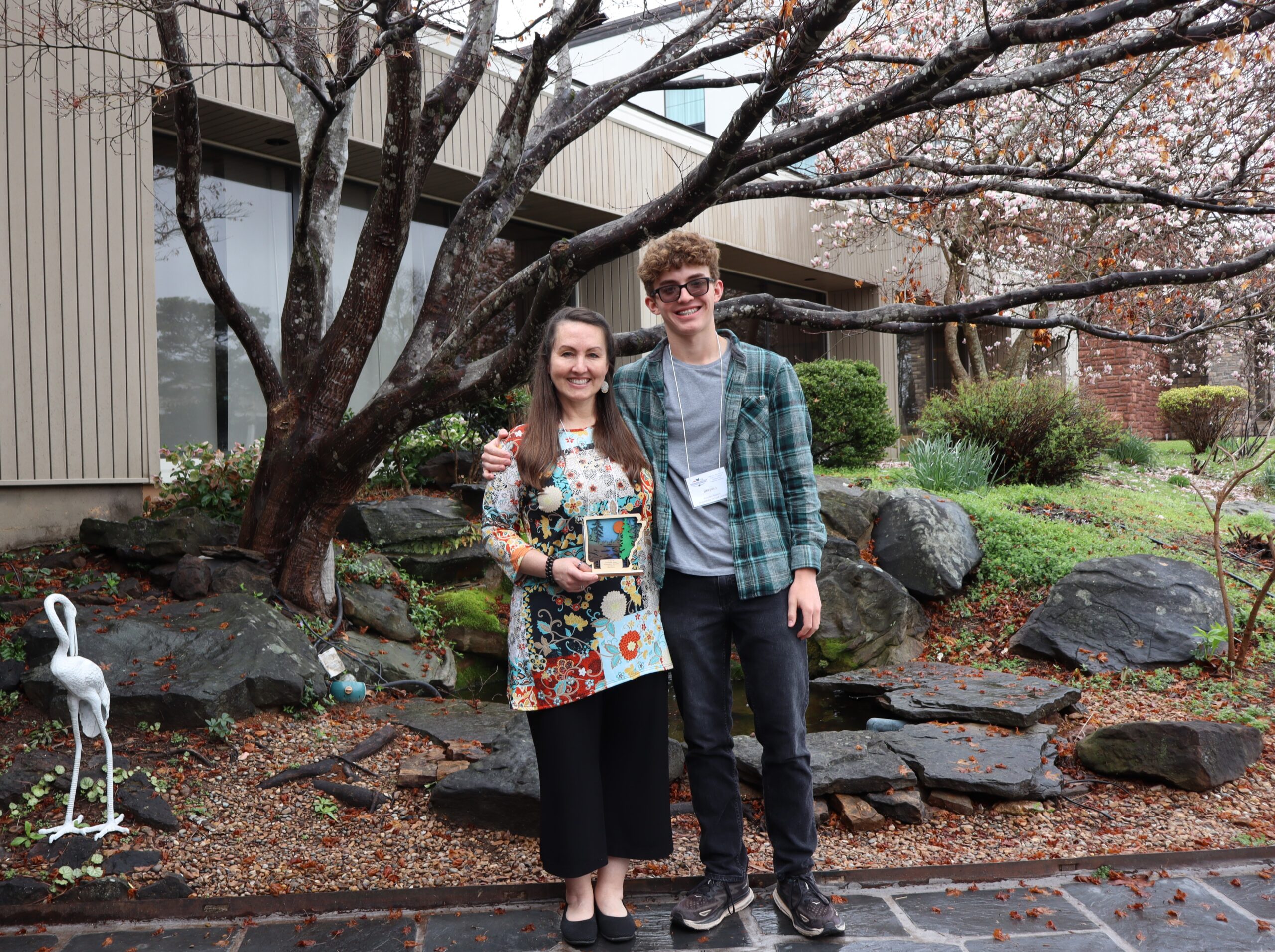
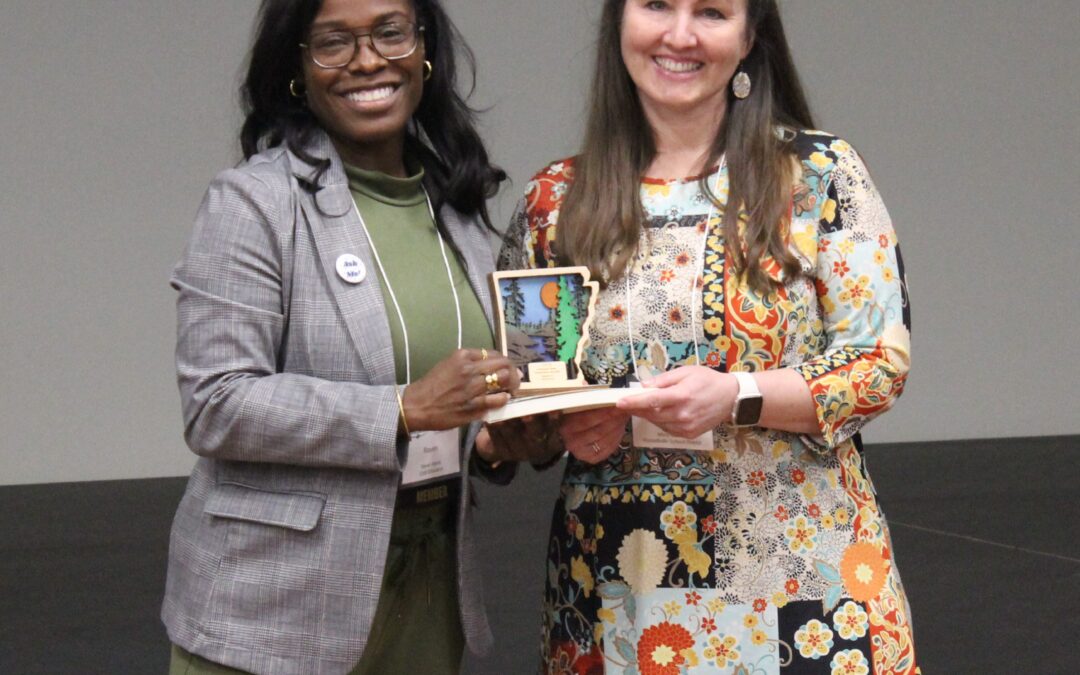
Above image: Raven Harris, AEEA Board President, presents Misty Barron with the Outstanding Formal Environmental Educator Award.
Each year AEEA recognizes individuals who have made an impact in environmental and outdoor education. These individuals facilitate participant leadership and involvement, support hands-on learning, promote critical and creative thinking in students, partner with other organizations and individuals, address problems of local environmental importance, and develop and implement innovative programs or projects. Below is the story of one of 2026’s Outstanding Environmental Educators.
Misty Barron, 2026 Outstanding Formal Environmental Educator
Environmental Science and Biology Teacher, Russellville High School
From the Field to the Classroom
Misty Barron’s career in science began long before she entered formal education. Her work has ranged from a Keeper in the avian and education departments at the Baton Rouge Zoo to monitoring endangered Black-Capped Vireo populations for The Nature Conservancy in Texas to conducting field research on Greater Sage Grouse in North Dakota to research projects with the Illinois Natural History Survey. She also managed a community garden and conducted biological research in Washington State and Australia. That background shapes everything she does as a teacher in biology and environmental science, both at the collegiate level and high school levels.
When asked what inspired her to make the transition into teaching, Misty points to her family and her own children:
“I come from a family of educators, my paternal grandfather started teaching in a one-room schoolhouse in Missouri and retired as the Superintendent of Kern County Schools in Bakersfield, CA. But I never really considered it until after I became a mom. Watching my kids grow in their knowledge and information about their world really spoke to both my biologist and psychologist backgrounds. When it came time for me to settle down from field biology, teaching science was a great way to meld both those interests and explore a new passion.”
“I come from a family of educators — my paternal grandfather started teaching in a one-room schoolhouse in Missouri and retired as the Superintendent of Kern County Schools in Bakersfield, CA. But I never really considered it until after I became a mom. Watching my kids grow in their knowledge and information about their world really spoke to both my biologist and psychologist backgrounds. When it came time for me to settle down from field biology, teaching science was a great way to meld both those interests and explore a new passion.”
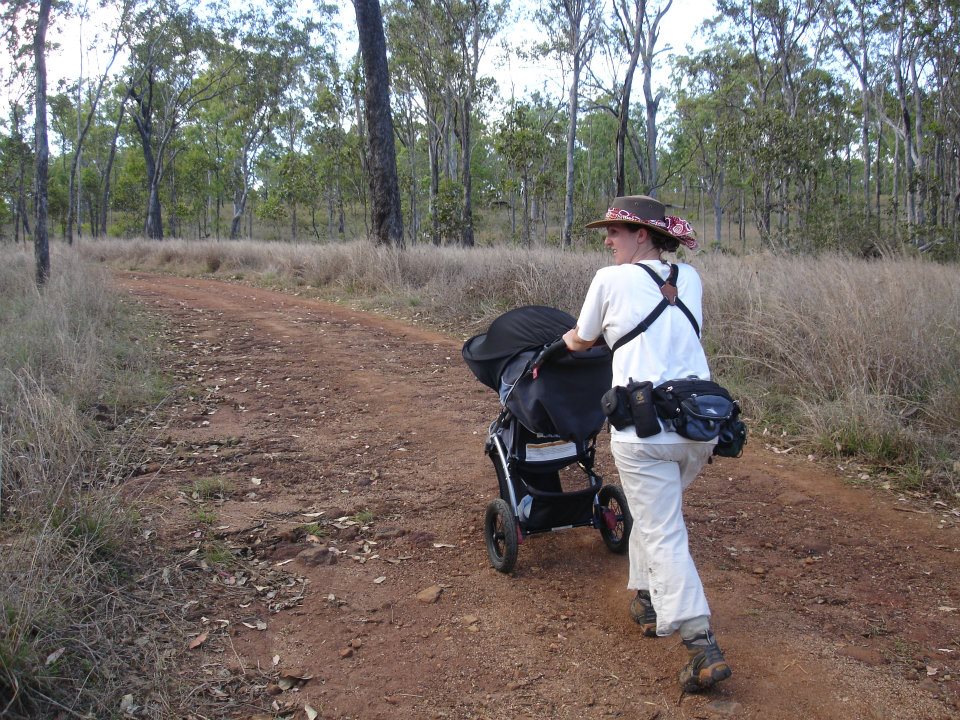
Misty conducting field research in Australia while pushing a baby stroller with one of her kids in it.
Learning by Doing
Since joining Russellville High School in 2019, Misty has grown the AP Environmental Science program five-fold. A school-wide recycling initiative run by her environmental science classes serves more than 1,200 students and faculty. She sponsors the school Gardening Club, and has expanded the STEM garden to 60 active plots and two dozen perennial beds. She oversees the student-led composting program which manages food waste and produces compost for the school gardens.
Misty strongly promotes hands-on involvement and critical thinking through extensive outdoor and project-based learning. Students in her Environmental Science class are each assigned an individual garden plot in the school’s STEM gardens, where lessons build laboratory skills, encourage problem-solving, and empower students to transfer their learning beyond school. Misty has also built a hydroponic growing system in the school greenhouse and installed an aeroponic growing system in her classroom giving students direct exposure to alternative food production technologies and resource-efficient agriculture.
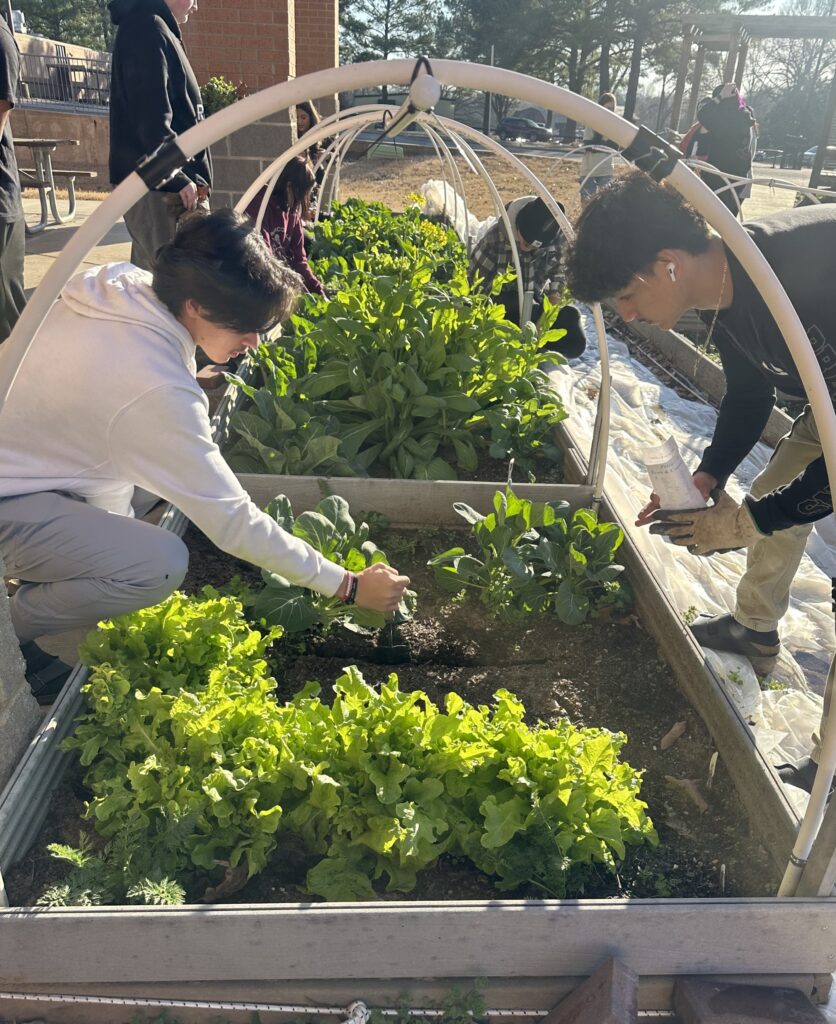
“I love connecting kids with where their food comes from. Even if they don’t get into the philosophical appreciation of a functioning wetland ecosystem or colorful sunset, everyone eats. In my classes we grow hydroponic and aeroponic foods and vegetables in school garden plots. It is just so rewarding to see kids come alive in the gardens and enjoy the self satisfaction of growing something they can eat.”
In AP Environmental Science, students raise Painted Lady butterflies in an 8-foot enclosure, tracking mass changes from egg to adult to explore energy transfer efficiency in food chains. This lesson connects to broader discussions about butterfly lifecycles, habitat loss, pesticide use, and land management. Students often connect this learning to the school gardens where they have grown milkweed for Monarch butterflies.
A campus wetlands classroom provides a perfect setting for water quality surveys and ecosystem health assessments. Drawing on her experience as a field biologist, Misty teaches students how to measure and evaluate ecological indicators, fostering critical thinking and scientific inquiry in an authentic field setting. In another creative lab design, students visit a local cemetery to quantify survivorship curves using real data, making abstract concepts about human population growth and longevity concrete and locally grounded.
Tacking Authentic Environmental Problems
Misty’s programs are consistently anchored to problems that are authentic, local, and consequential. Her students have cold-stratified and germinated hundreds of native milkweed plants in the school greenhouse, then planted them across five locations in the area to restore habitat for struggling Monarch populations. They have studied water quality in campus wetlands and worked with the Army Corps of Engineers at a local lock and dam.
In 2024, five of her high school students participated alongside college students and community members in a bioacoustic research project during the solar eclipse, in partnership with Arkansas Tech University and NASA, sitting alongside researchers and scientists in a way that is not a standard feature of high school science education.
Her teaching consistently demonstrates that environmental challenges are local as well as global, and her students are capable of doing something about them.
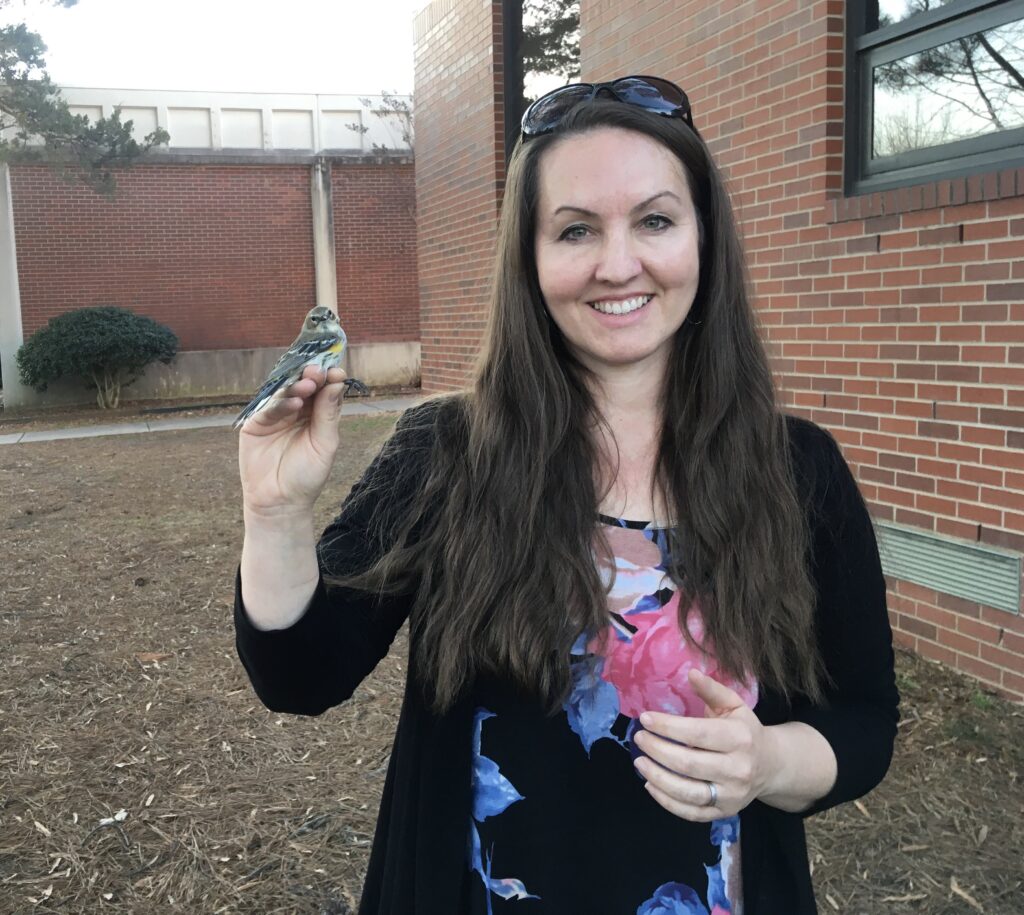
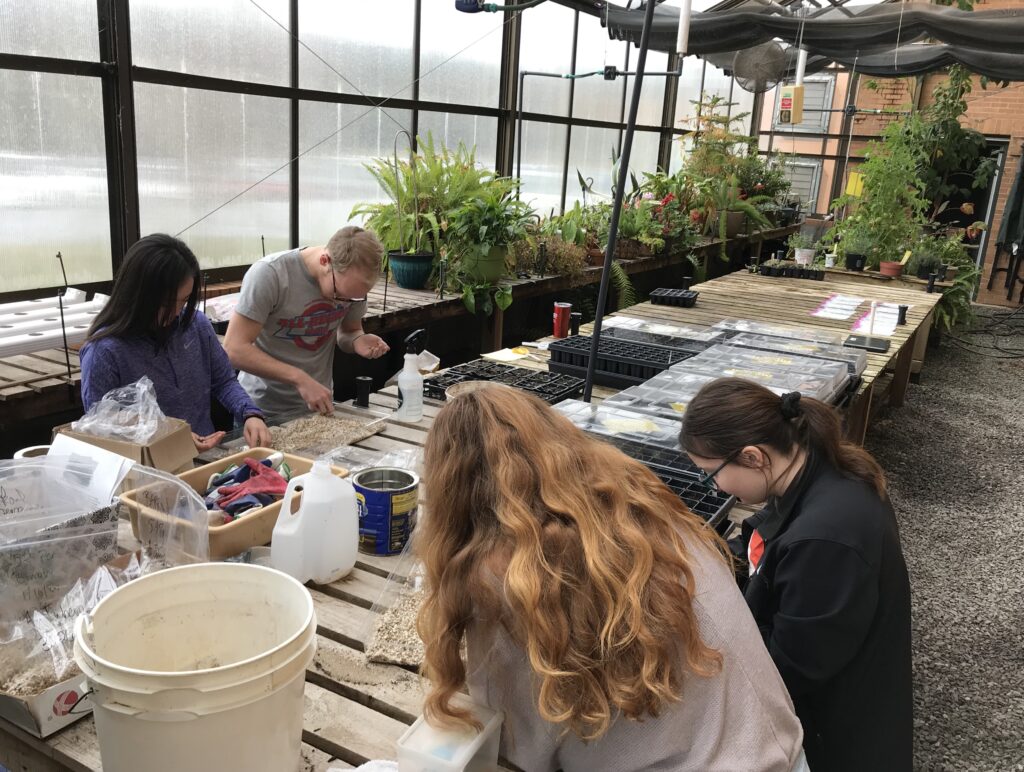
Above images: Misty bird banding for research and students planting milkweed seeds.
Partnerships and Collaboration
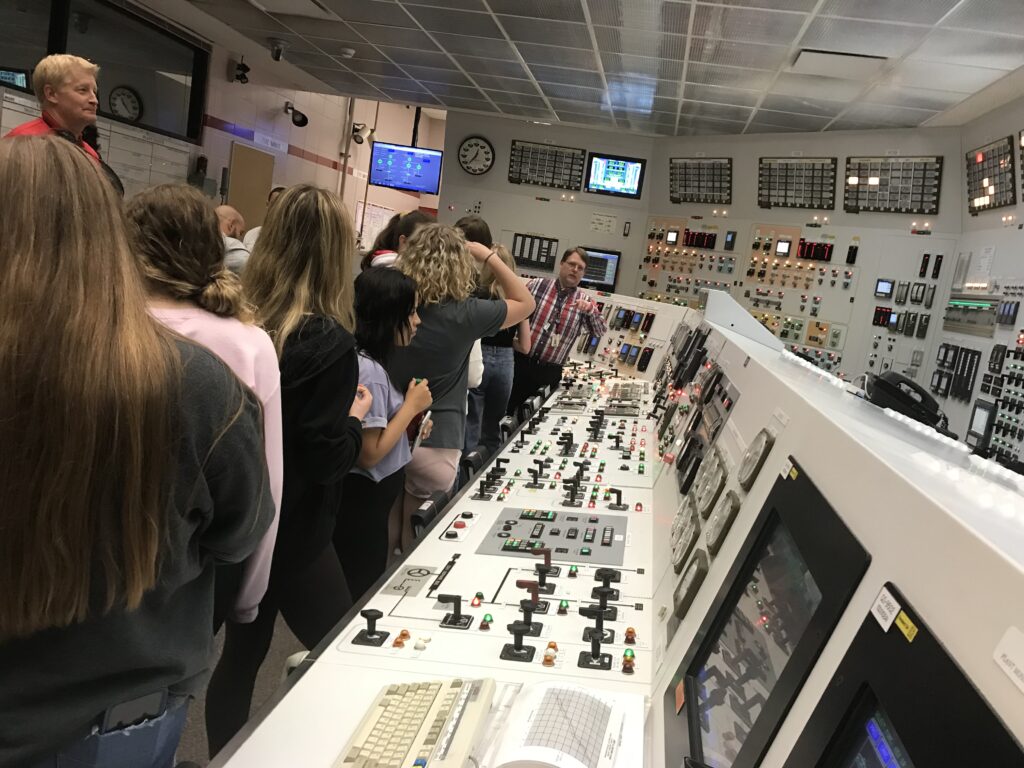
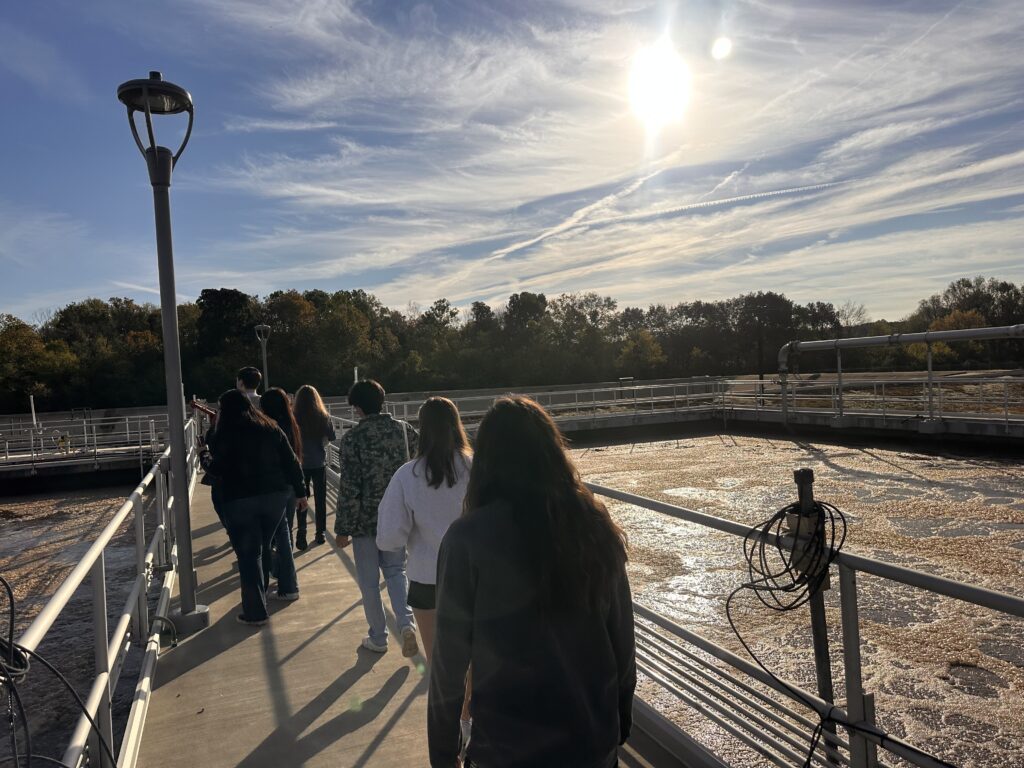
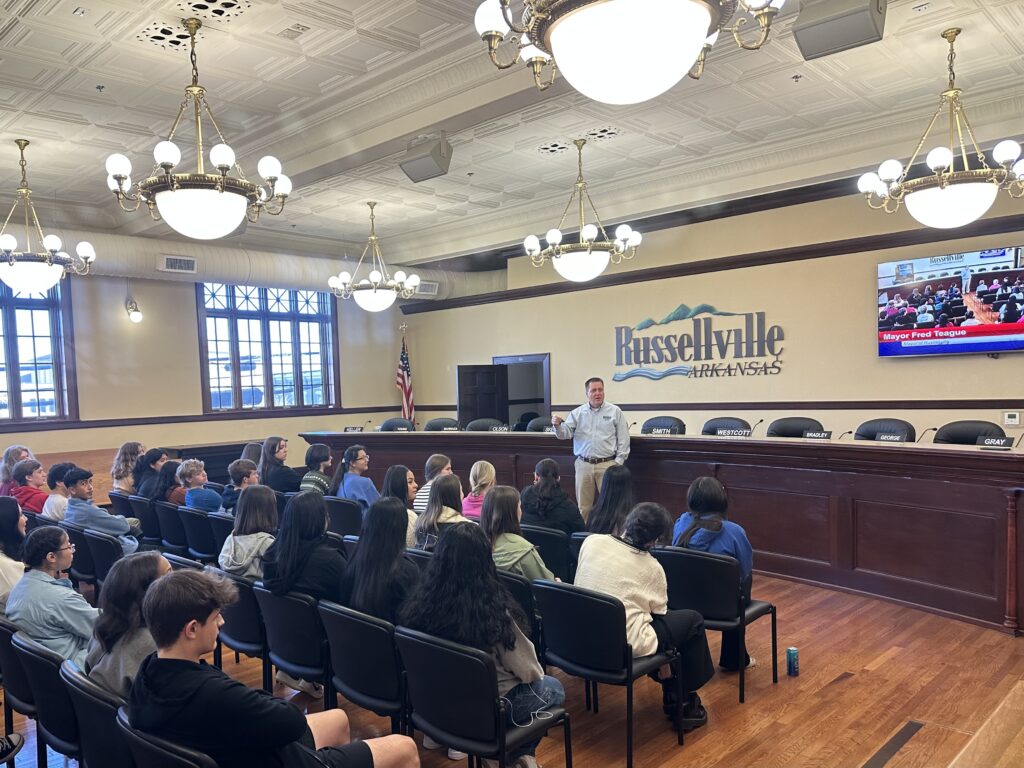
Misty has built partnerships that bring the professional world into her classroom and take students out into the community. She leads an annual joint field experience between AP Human Geography and AP Environmental Science students, a cross-disciplinary collaboration that has included visits to municipal water and wastewater treatment facilities, solar arrays, and clean energy sites, as well as meetings with city officials to discuss planning and sustainability. She has also brought professionals directly into the classroom, with representatives from local government and industry speaking to students about careers, civic engagement, and local environmental problem-solving.
Lessons From Nature
One of the unexpected lessons from nature that Misty has learned is “Perfect imperfection.”
“We create these controlled environments we live in, houses, offices, schools, etc. that don’t really reflect the ‘real world’ or nature much. In nature you can’t control the temperature, water doesn’t appear on demand, trees don’t grow in perfectly straight lines, rocks aren’t perfectly round (and how boring would it be if they were?!). Yet, though nature might not adhere to the version of “perfection” you’d see on HGTV, it is (when operating correctly) perfectly in balance. There are ebbs and flows that can provide our fundamental needs but without allowing you to get so comfortable you forget to be grateful every time the sun comes up. It’s simple, imperfect, and absolutely beautiful.
Don’t get me wrong, I love electricity and indoor plumbing, but I realize for most of human history we have not had those modern conveniences and life could be (and still is for many) very different. So when life doesn’t seem “perfect” I try to remember that perfection isn’t the goal, balance is.”
Looking Forward
When asked what excites her about the future, Misty doesn’t shy away from the weight of the challenges ahead, or her optimism about the people who will face them.
“I teach environmental science, which looks at the way humans interact with their environment. Sometimes we forget it, but everything we need for life, oxygen, water, and food, comes from the environment, as well as everything we build economies on. In my parents’ lifetimes we have quadrupled the number of people on Earth (2 to 8 billion), so I think there is more understanding and awareness about the need for sustainability in the younger generations. I am excited to see them become the stewards of our collective futures. “
Her former students reflect that investment back. Over her teaching career, Misty has reached nearly 2,000 students in biology and environmental science; more than 250 have completed AP Environmental Science, and the majority earned college credit by passing the AP exam. Some have gone on to careers in field biology, environmental law, city planning, solar energy, environmental journalism, and agriculture, a range that mirrors the breadth of what she teaches and the depth with which she teaches it.